01 / posts
stacktracing
Notes on software, infrastructure and tinkering.
-

Lombok: The Most Useful Java Library
Project Lombok removes Java boilerplate like getters, setters, constructors, and builders with a few annotations. In this post, you will learn how it works and when to use it.
-

What are Consensus Algorithms?
Consensus algorithms like Paxos and Raft let a group of unreliable machines agree on a single value. In this post, you will learn the problem they solve and how they work.
-

Follow These 12 Guidelines to Build Good Software
The Twelve-Factor App is a set of 12 guidelines for building software that is easy to deploy, scale, and maintain. In this post, you will learn what each one means.
-

Never Have a Single Point of Failure in your Application
A single point of failure is any part of your system that takes everything down when it breaks. In this post, you will learn how to find them and how to get rid of them.
-

How to Define Software Incident Severities
Incident severity levels give your team a shared way to answer 'how bad is it?'. In this post, you will learn how to define them and what to attach to each level.
-

This is why You Should Care about MTTD and MTTR
MTTD and MTTR measure how quickly you notice and fix problems. In this post, you will learn what they mean, how to calculate them, and how to improve both.
-

The DevOps Guide to Load Balancers
A load balancer spreads requests across a group of servers. In this post, you will learn how they work, which metrics to alarm on, and how to troubleshoot the problems you are most likely to run into.
-

How to Set up a Free CI/CD Pipeline using GitHub Actions
GitHub Actions lets you build, test, and deploy straight from your repository for free. In this post, you will learn how to set up a pipeline in a few easy steps.
-

How does CI/CD work?
CI/CD automatically builds, tests, and releases your software every time the code changes. In this post, you will learn what a pipeline looks like and what makes a good one.
-

What is the CAP Theorem in Simple Terms?
The CAP theorem says a distributed data store can only guarantee two of three things: consistency, availability, and partition tolerance. In this post, you will learn what that really means.
-
The #1 Free Planning Poker and Retrospective Tool for Agile Teams
Discover scrum.host, a free, simple tool for Planning Poker and Retrospectives. No sign-up required. Streamline your Scrum and Agile processes today.
-
3 Easy Steps to Install Jellyfin with Docker-Compose
-
Project Showcase: Healthcare Data Visualization with Elasticsearch
A showcase for a project I lead at Shasta Networks to implement Healthcare Data Visualization using Elasticsearch.
-
Test Driven Development: The 5 Step Process to Better Software
Test Driven Development (TDD) is a process for building software that improves quality. In this post, you will learn the background of TDD and how to apply it.
-

How to Hack WiFi Passwords With Aircrack-Ng [WEP/WPA2]
Learn how to hack Wi-Fi passwords with Aircrack-Ng. I'll show you how to set up and use the wi-fi hacking program to hack WEP, WPA, and WPA2-secured networks.
-
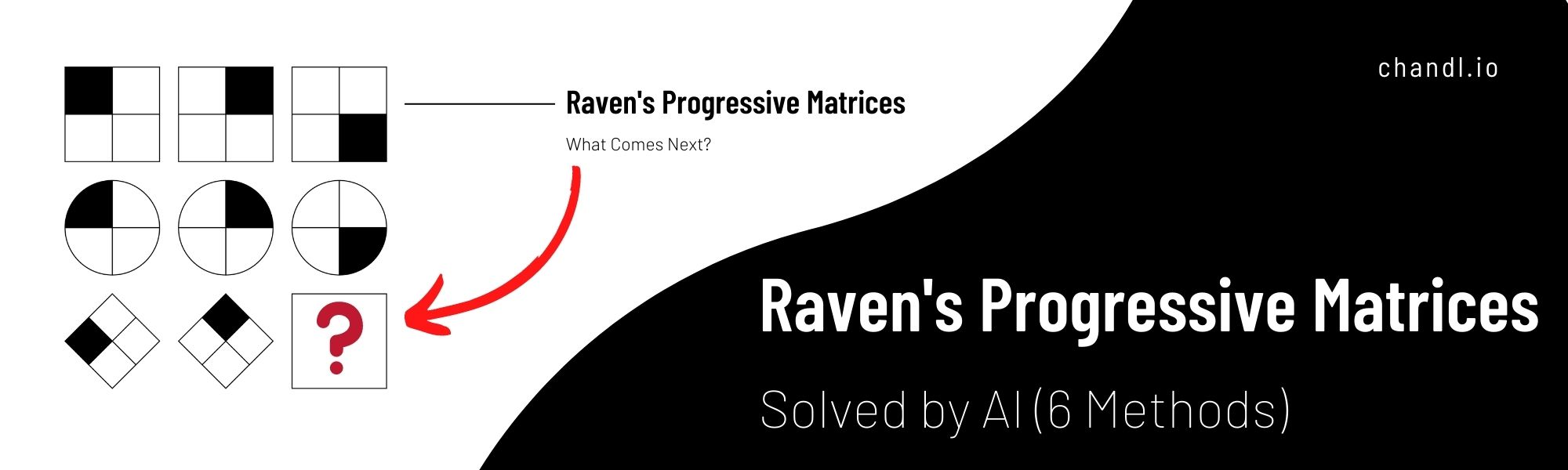
Raven's Progressive Matrices - Create an Intelligent AI Test Solver (6 methods)
Testing 6 methods that you can use to create an AI Intelligence Test solver that solves Raven's Progressive Matrices questions.
-

Breaking Down the Real Time Streaming Protocol (RTSP) [RFC 2326]
Real Time Streaming Protocol (RTSP) - the protocol used for playing, pausing, and stopping all of your favorite media. Learn how it works behind the scenes...
-
6 Easy Steps to Install Docker on Oracle Linux 7/8 (+ Docker Compose)
The 6 steps to install Docker on Oracle Linux. A fairly quick and simple installation that should only take you between 5-10 minutes.